|
26/08/07
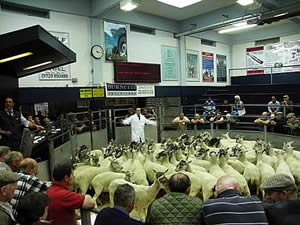
The opening of livestock markets is welcome by all. However
as livestock start to move again in the next few weeks, Brian
Hosie, SAC Veterinary Manager urges that there is still a need
for vigilance, and biosecurity measures need to be in place to
reduce the risk of disease in flocks and herds.
“There is a considerable backlog of stock to move through
the marketing system. Farmers should review their own farm’s
quarantine and biosecurity arrangements now.” says Brian.
“With the heavy pressure on all stages of the marketing
system at this time, farmers must adopt a planned approach for
incoming stock. There is a greater risk that diseases such as BVD
and pneumonia in cattle and sheep scab will spread in the coming
weeks, with so many stock on the move.”
The following information for cattle and sheep farmers is freely available on the SAC web:
Notes:
- A four-week quarantine period is recommended for all bought-in cattle and sheep.
- All incoming sheep should be treated for sheep scab using either a dip or an injectable product (avermectin/milbemycin group 3 wormer). Depending on the product used a second injection may be required. Use of a dip will also treat lice, otherwise a pour-on product can be used.
- Sheep should be treated to prevent the introduction of anthelmintic resistant worms. A group 2 (levamisole) and a group 3 (avermectin/milbemycin) wormer should be given sequentially. The latter treatment will also target sheep scab (though a second injection may be needed for treatment depending on the product). Sheep should be kept yarded for 24-48 hours after treatment. Seek advice from your vet when using several different wormer and dip products.
- Incoming cattle and sheep should also be treated for liver fluke to prevent the introduction of fluke into previously unaffected areas, to reduce the likelihood of introducing resistant flukes and to eliminate existing burdens which limit production and can result in deaths. The animals should be treated sequentially with a product containing closantel or nitroxynil and, on a different day, with a product containing triclabendazole. It is recommended that incoming cattle and sheep are kept off mud snail infested pastures for four weeks.
- To reduce the risk of introducing MV, CLA and EAE, purchase sheep with certified free status.
- Ideally foot-bath sheep with either 10% zinc sulphate or with 3% formalin on three occasions during the quarantine period. This should eliminate foot rot. Then examine the feet of any lame sheep and seek veterinary advice if unsure of the condition or if it is not responding to treatment. CODD is a relatively new condition of sheep and causes swelling of tissue around the top of the hoof and in severe cases the whole hoof can shed. It does not respond to conventional treatments for footrot.
- Source breeding sheep from flocks with no history of Johne's disease and OPA (Jaagsiekte).
- Source breeding cattle from herds with accredited-free status. Herds can be certified as being free of BVD virus, Johne's disease, IBR and Leptospirosis.
- If accredited cattle cannot be sourced, carry out a blood test to determine the animals' status within 7-14 days of arrival. A second test 28 days later, whilst the animal is still in quarantine, is strongly recommended to check for evidence of recent exposure as the animal may have been exposed at market and could still pose a risk to the herd.
- Incoming cattle may need to be vaccinated whilst in quarantine to protect them from infections such as BVD or pneumonia already present in the herd.
- Have a separate set of overalls and a disinfectant footbath for dealing with stock in quarantine. These animals should be fed and handled after the rest of the herd.
UK Cattle Industry Beware the Blue Tongue threat
FMD
Exit Strategy Will Allow Livestock Sector to Plan Ahead
NFU
Maps Out Foot and Mouth Road to Recovery |